
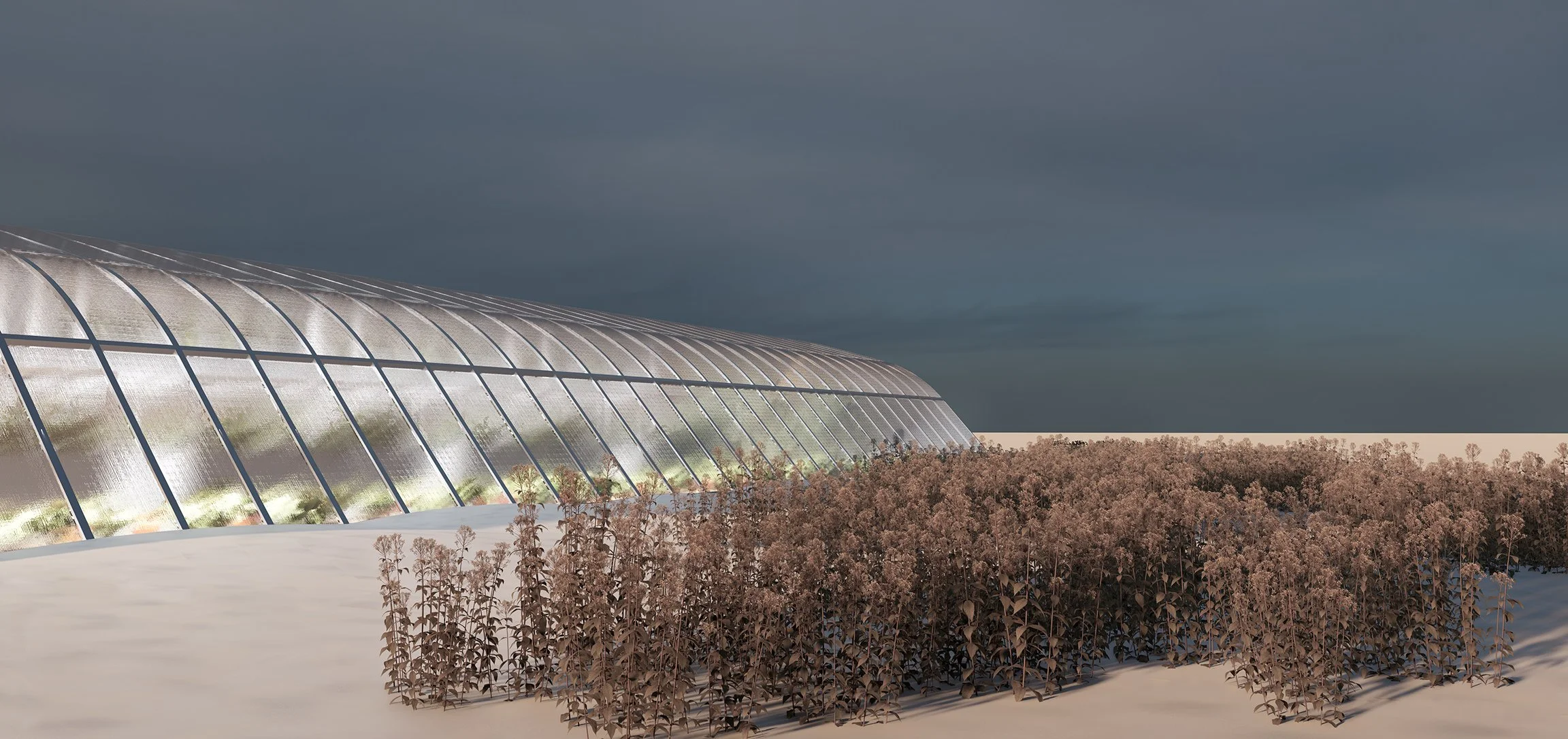
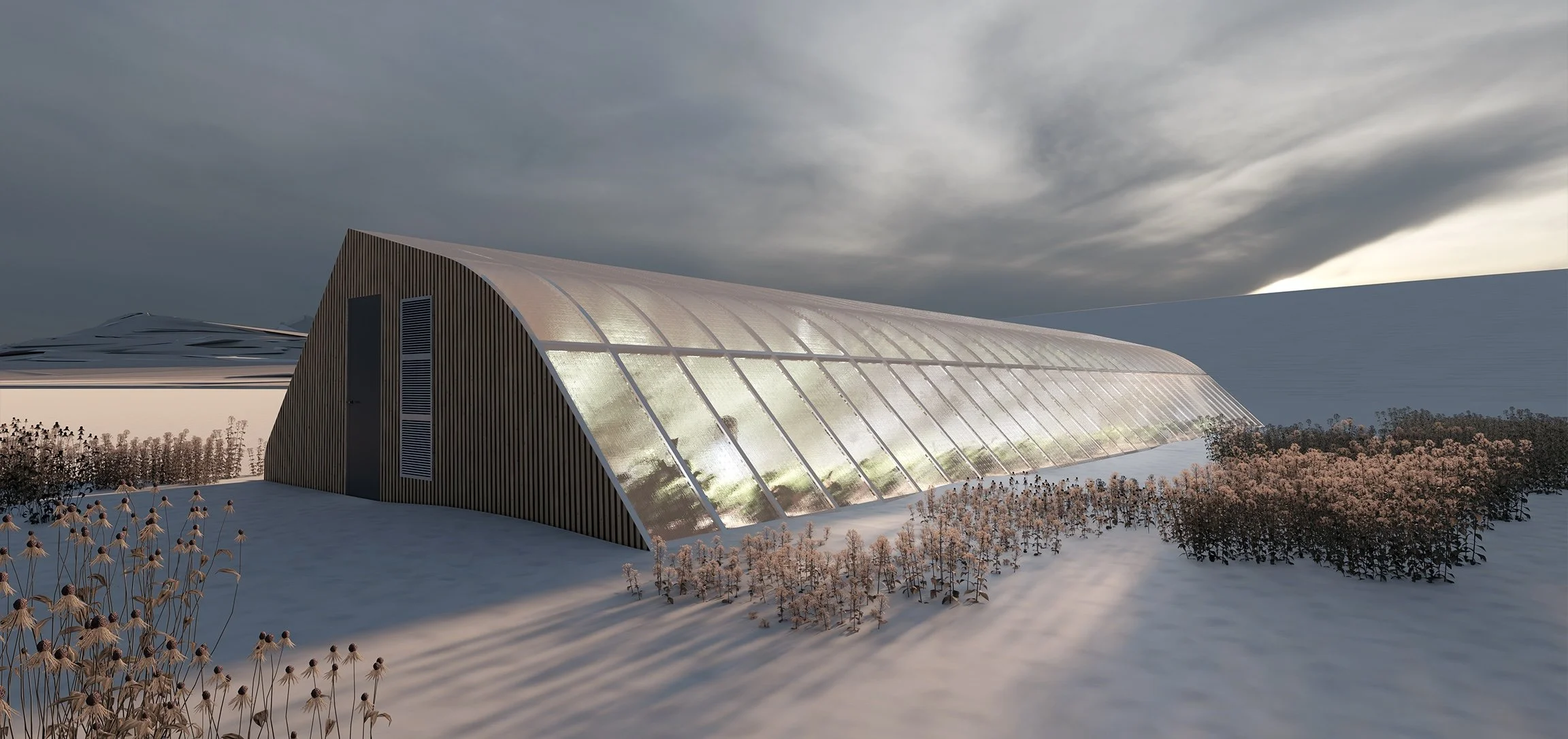
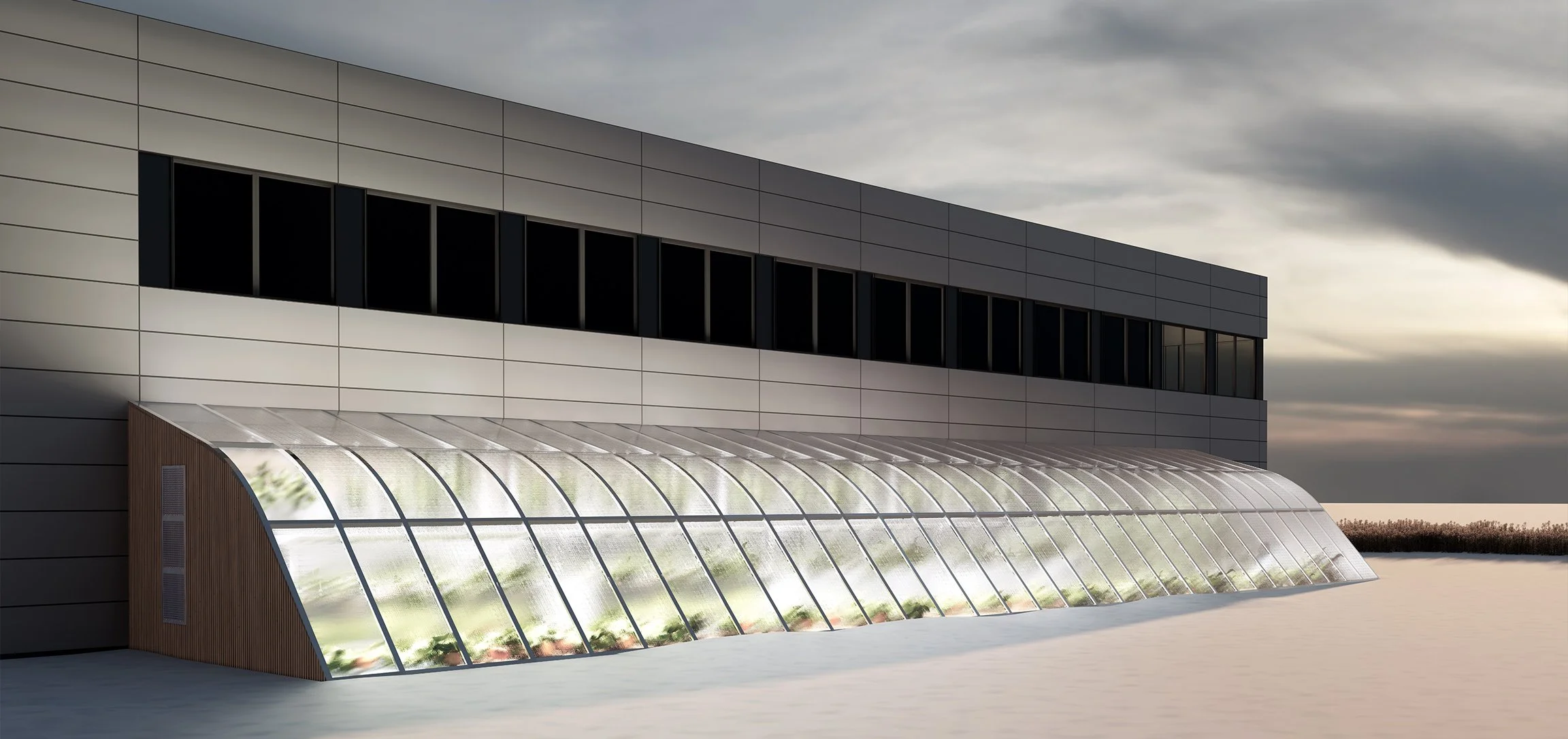
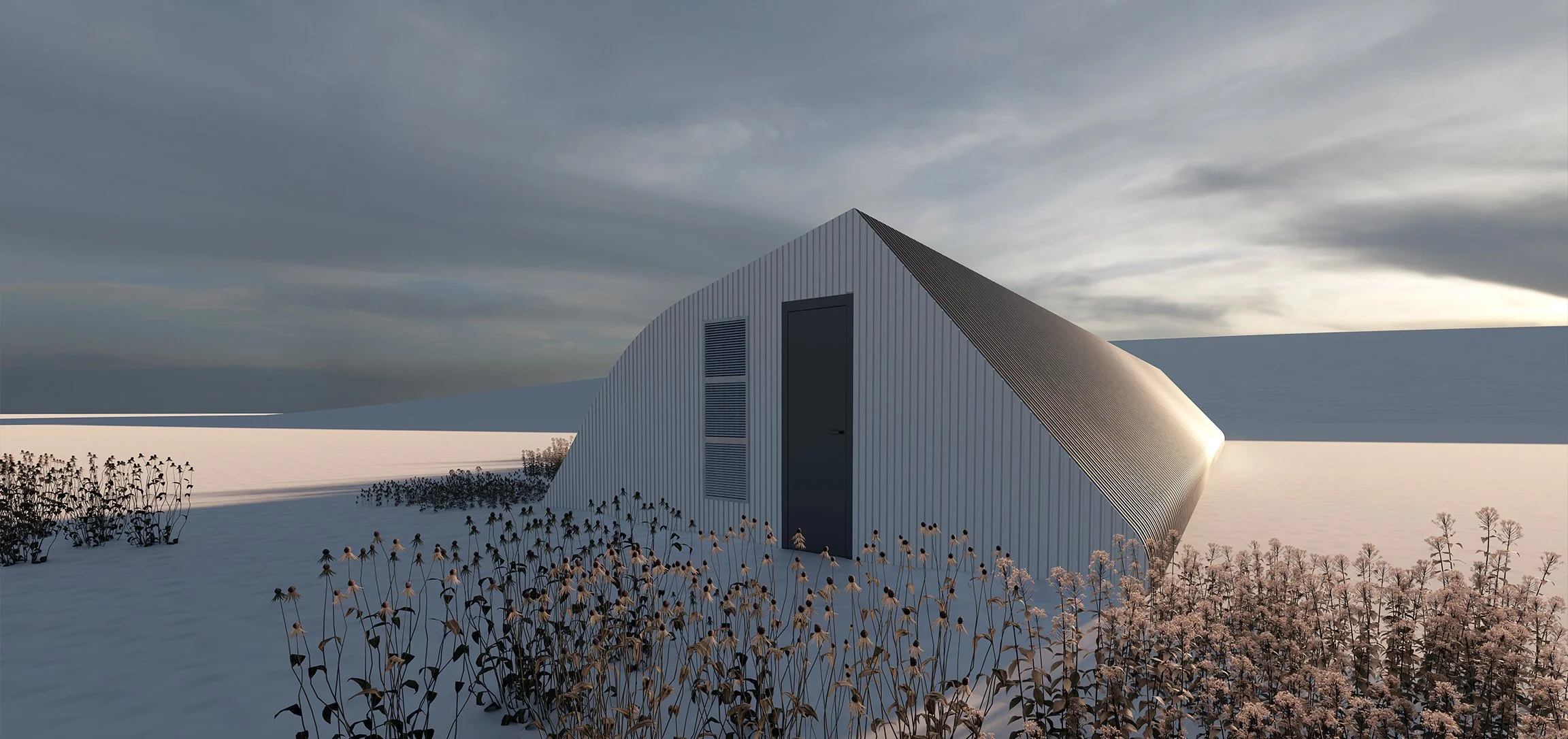
PASSIVE SOLAR ARCTIC
FARMS
COMMUNITY-LED
SOVEREIGN FOOD
INFRASTRUCTURE
While highly controlled hydroponic vertical farms are ideal for consistent leafy green production, salad greens alone are not the answer to food insecurity; many remote communities benefit from systems that are adaptable to broader crop diversity while also being more intuitive and resilient in remote contexts.
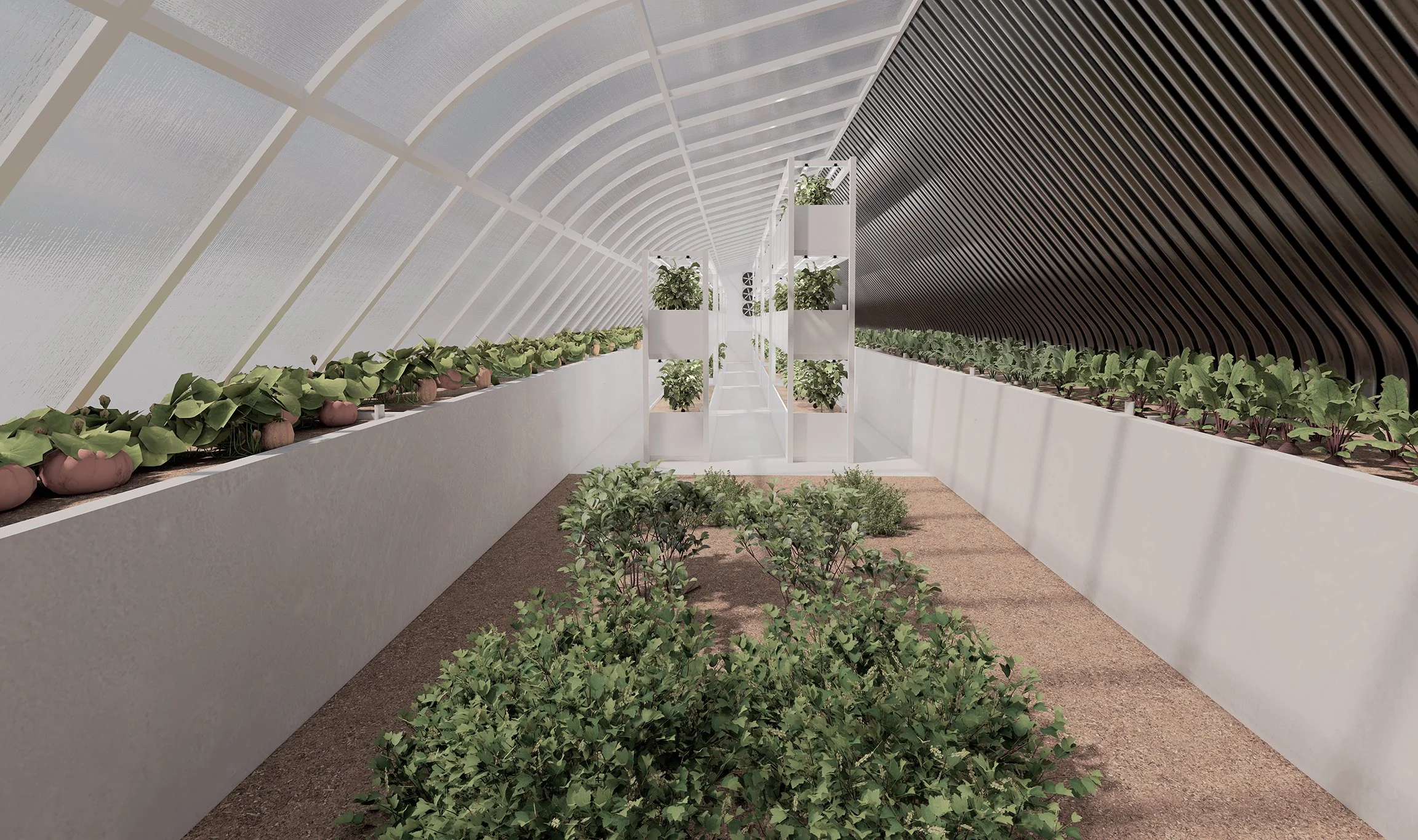
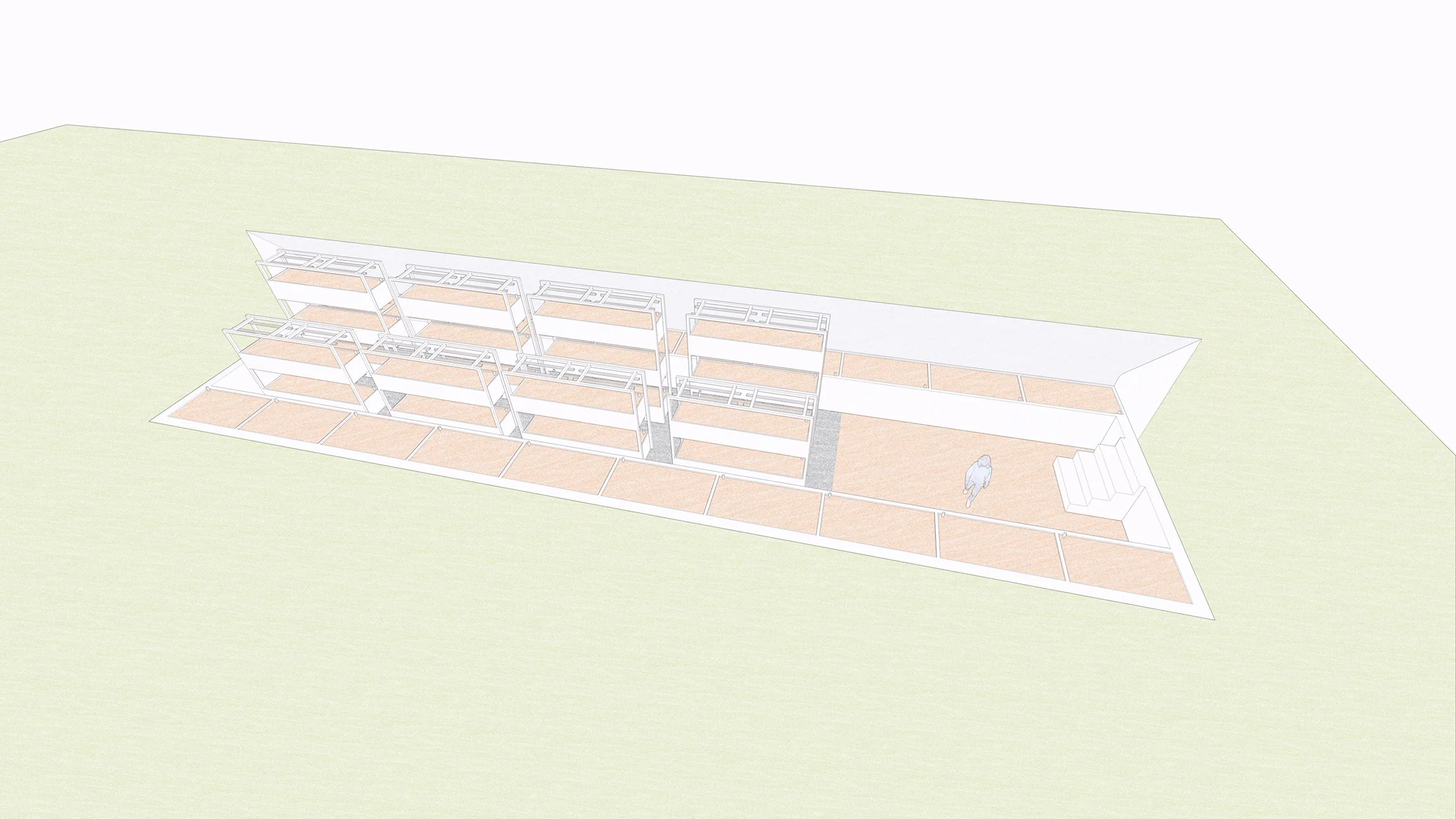
With the ability to grow high-density root crops, fruiting vegetables, berry crops and culturally significant plants, our greenhouses, paired with our proprietary growing system, address the need for calorically dense local food production in remote communities while prioritizing lower operational complexity, long-term maintainability and flexibility that responds to community needs.
The current mainstream approach to indoor farming in remote communities involves the installation of high-tech hydroponic container farms. These farms cost upwards of $325,000, have steep learning curves and are generally limited to growing leafy greens and herbs. As Andrew Spring, Canada Research Chair in Northern Sustainable Food Systems, says, “salad greens are not the answer to food insecurity. What’s needed from a food security standpoint are things that go in a stew”—hearty produce such as root crops and fruiting vegetables.
Repairs to high-tech hydroponic farms are also challenging when parts and technicians need to travel to isolated areas. Additionally, as with all above-ground greenhouses, container farms use significant energy to heat and cool their growing environments. Finally, the synthetic fertilizers used in these farms lack trace elements such as silica, which leads to produce becoming extremely limp after harvest.
SEA TO SKY BOTANICS solves all of these problems with its alternative approach to indoor farming.
Our greenhouses and proprietary growing system:
Respond to local needs by providing community-led infrastructure that enhances food sovereignty and access to culturally significant plants
Include long-term maintainability plans and support
Are more affordable and lower maintenance than hydroponic container farms
Are easy to repair
Have an extremely shallow learning curve
Utilize ground-coupled heat exchangers to maintain growing temperatures while reducing carbon footprints and energy bills
Can grow root crops, large vining fruit crops, culturally significant plants and perennial fruits
Use beneficial microbiology and organic fertilizers; this means healthier plants that rarely get nutrient deficiencies
Provide skills and technologies that are entirely transferable to the outdoor environment
Please contact us to learn more.